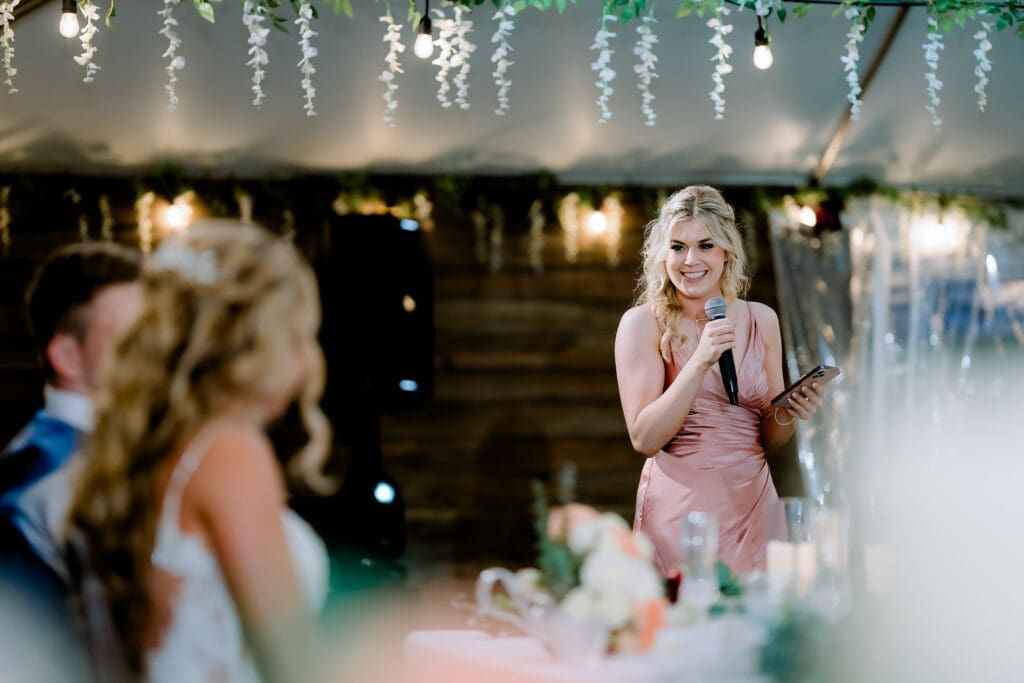
If you’ve started scrolling through wedding photographer portfolios, you’ve probably noticed something: gorgeous, golden, sun-drenched photos. Fields at sunset. Soft light pouring through a barn door. Dreamy, romantic, editorial.
But here’s a question almost no one asks — where are all the indoor photos?
Where’s the bride prep photo taken in a hotel room with three lamps and one window? Where’s the reception dance floor shot, lit by nothing but string lights and a DJ booth? Where’s the cake cutting that happened at 8:47pm inside a dim reception hall?
If a portfolio is 90% outdoor, golden-hour glow, that’s not necessarily because the photographer only shoots outdoors — it’s often because low light wedding photography is hard, and not every photographer wants you to see how they handle it. This is exactly why finding the best wedding photographers for a low light reception takes a slightly different search than finding a great outdoor or golden-hour photographer. Let’s talk about why that matters, and what you should actually be looking for.
How Much of Your Wedding Day Actually Happens in Low Light?
Take a second and think through your day. Bride prep, first look or first touch (if indoors), your ceremony (if it’s indoors), reception entrance, dinner, speeches, cake cutting, bouquet toss, dancing, and your grand exit — all of these typically happen in spaces where natural light is limited or gone entirely.
Add that up, and it’s easily over 50% of your wedding day — sometimes closer to 60-70% — happening in conditions where a photographer needs to use flash just to get a sharp, usable image. Without it, you’re left with blurry, grainy, or unusably dark photos.
So if low light reception photography makes up more than half of your wedding day, shouldn’t it make up more than half of the portfolio you’re judging your photographer by? That disconnect is exactly what we want you to start noticing — and it’s the first sign of whether you’re looking at one of the best wedding photographers for a low light reception or simply a great outdoor photographer.
The Black & White Giveaway
Here’s a little industry secret: scroll through a photographer’s indoor gallery — prep, reception, dancing, speeches — and pay close attention to how many of those photos are black and white.
There are really only two reasons a photographer converts a photo to black and white:
Reason 1: It’s an intentional artistic choice. Sometimes black and white genuinely elevates an emotional moment — a father’s reaction during the first look, tears during a speech. Used sparingly, it’s beautiful.
Reason 2: The skin tones were bad, and black and white is the fix. This is the one nobody talks about. If a huge portion of a photographer’s indoor gallery is black and white, it may not be an artistic choice at all — it may be damage control.
Here’s why: most indoor wedding venues use tungsten lighting, which casts a warm, yellow-orange tone across everything — including skin. When a photographer bounces their flash off the ceiling or walls to light the room (more on this below), the flash literally picks up the color of whatever surface it bounces off of. Yellow walls or dark wood-toned ceilings mean that yellow or muddy tone transfers straight onto your skin in the photo.
The result is skin tones that look sallow, orange, gray, or just… off. Converting the image to black and white is often the easiest way to hide that the color was never right in the first place. It’s a fix, not a style.
That doesn’t mean every black-and-white photo is a cover-up — but if a photographer’s entire indoor gallery is black and white, it’s worth asking why.
What About Your Indoor Ceremony?
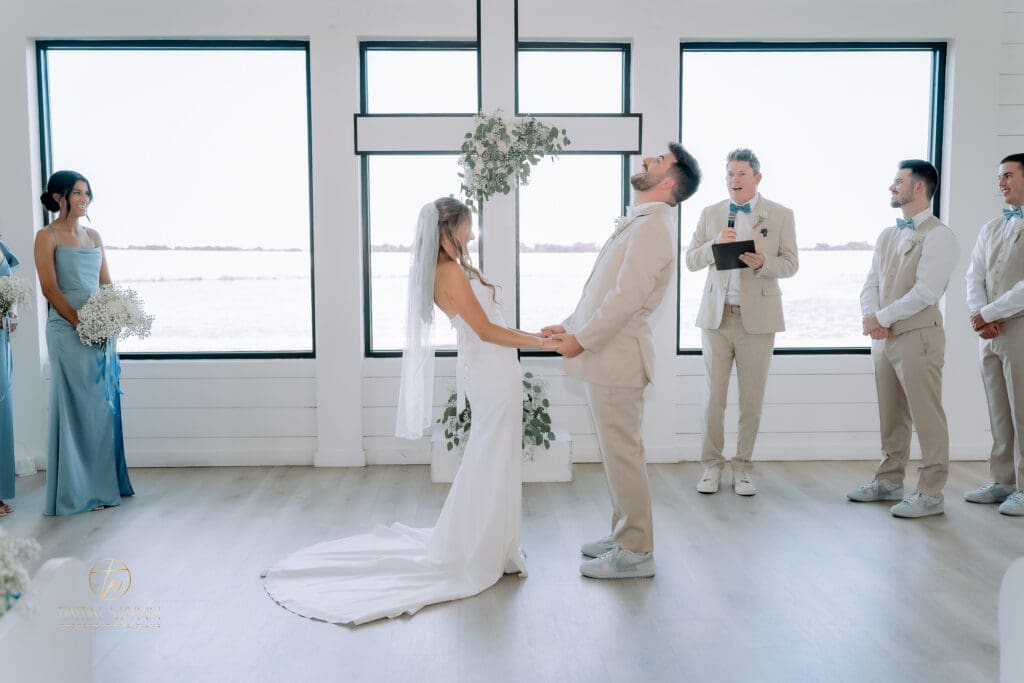
Many indoor ceremony venues position the altar in front of large windows — it’s stunning in person, and can be gorgeous in photos too. But it comes with a real lighting challenge.
Depending on the time of day and how much sun is hitting that window, your officiant and the two of you could end up shot directly against a wall of bright light. This creates backlighting, and depending on the intensity, it can range from a soft, slightly hazy glow all the way to a blown-out, silhouette-style problem where your faces go dark and featureless while the window behind you turns into a solid white void. Cameras struggle to properly expose for both a bright window and a person standing in front of it at the same time — without the right technique (or supplemental light), you either lose the detail in your faces or lose the window entirely.
Then there’s the processional. As you walk down the aisle, you’re often moving away from that window and into a much darker part of the room. Without flash, that motion combined with low light frequently results in blurry, soft-focus images — exactly the kind of shot you don’t want from the moment you’re walking toward your soon-to-be spouse.
The Flash Techniques Every Couple Should Know About
Not all flash is created equal, and the technique a photographer defaults to is one of the clearest signals of whether they’re equipped to handle a low light reception well. Here are the three main approaches photographers use, and what each one actually does to your gallery:
1. Direct Flash
This is trending right now — flash mounted straight on the camera, pointed directly at the subject. It creates a bright, punchy, high-contrast look with strong white light on the subject.
The tradeoff: everything around the subject tends to disappear. Romantic candlelight on the tables, string lighting, uplighting, sconces, depth, dimension, DJ lighting during the party — all of it gets flattened out or lost. It’s a bold, stylized look, but it’s not designed to preserve the room you spent months designing.
2. Bounce Flash
This is the most commonly used technique because it’s the easiest way to light up an entire room at once — the flash is aimed at the ceiling or a wall, which reflects light back down more softly than direct flash.
The problem: it’s also the least reliable technique for accurate skin tones, especially in venues with tall ceilings, dark ceilings, or wood-toned walls. As mentioned above, the flash absorbs the color of whatever it bounces off, and skin tones can shift too orange, too yellow, or too pale/white depending on the surface. It also washes out the same ambiance and mood as direct flash — the candles, the string lights, the uplighting, all of it gets overpowered. And if your DJ is running colored lighting, bounce flash can pick that up too, leaving guests’ faces tinted blue, green, red, or yellow in your final gallery.
3. Off-Camera Flash (OCF)
This is the most advanced technique, and it takes years to learn and even longer to truly master. Off-camera flash means the light source is separated from the camera and placed strategically, allowing a skilled photographer to light you beautifully while preserving everything else in the room exactly as it was designed to feel.
Done well, OCF keeps your candlelit tables glowing, your string lights twinkling, your uplighting doing its job, and the depth and dimension of the room intact. It sets the mood rather than erasing it — because most reception spaces are designed to feel warm, intimate, and romantic, not blown out and stark or lost in the dark. This is the technique that separates the best wedding photographers for a low light reception from photographers who simply “get the shot” and move on.
Example images in my FB post here.
What This Means for You, Practically
Since somewhere between 60-70% of your wedding day may rely on flash, it’s worth doing a little homework before you book — this is your practical checklist for evaluating any low light wedding photography portfolio:
- Ask to see 3-5 full wedding galleries, start to finish — not just curated outdoor daytime photos.
- Specifically ask for indoor-heavy weddings if your own venue is mostly indoors, so you can see how that photographer actually handles flash in real conditions.
- Look closely at skin tones in reception and dancing photos. Do they look natural, or is everything leaning orange, gray, or oddly white?
- Notice the black and white ratio. A few intentional black and white photos are lovely. An entire indoor gallery in black and white is worth asking about.
- Look at the room itself. Can you still see the candlelight, the string lights, the up lighting — or did the flash wash all of that away?
And here’s the real test: will these photos still feel timeless in 10 or 20 years, when you’re showing them to your children, or one day your grandchildren? Trends fade. Harsh, washed-out flash photos and hidden skin tones tend to feel dated fast. Photos that actually preserved the light, the mood, and the true feeling of your day only get more meaningful with time.
But What If You Love the Direct Flash Look?
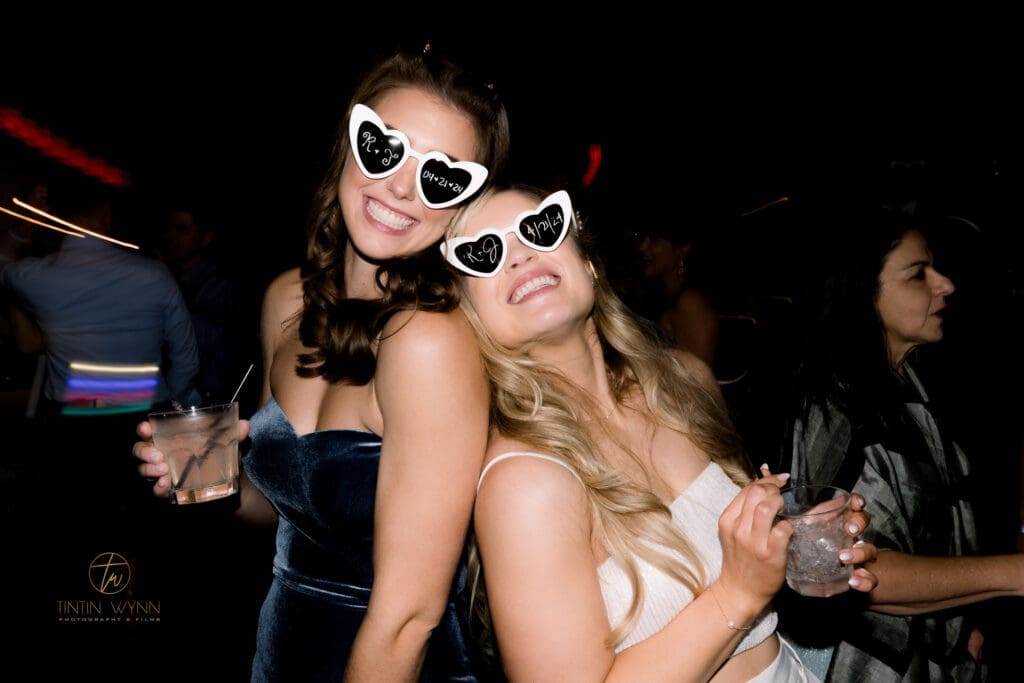
All of this said — if you’ve been scrolling Pinterest or Instagram and you’re drawn to that bright, punchy, direct-flash editorial look, there’s nothing wrong with that. It’s popular for a reason: it’s bold, modern, and has a real party-magazine energy that feels fresh and fun, especially for reception and dance floor moments.
The key is simply choosing it on purpose, not by accident. If direct flash is genuinely your style:
- Say so up front. Tell your photographer you love the direct flash aesthetic so they can shoot your day with that intention from the start, rather than defaulting to it because it’s the fastest, easiest technique to execute.
- Ask to see it in context. Request full galleries where direct flash was used throughout an entire reception, not just a few standout frames, so you know what an entire gallery in that style actually looks and feels like.
- Decide where you want it, and where you don’t. Many couples love direct flash for high-energy moments like the dance floor or the exit, but still want their ceremony, first look, and reception details captured in a softer, true-to-the-room style. A skilled photographer can blend both within the same day.
- Ask how they’ll handle skin tones and highlights in direct flash, since it can still wash out details if not metered carefully — trendy doesn’t have to mean inconsistent.
There’s no single “correct” way to document your wedding. Whether you’re drawn to the bright, editorial punch of direct flash or the soft, romantic glow of off-camera lighting, what matters most is that it’s a style you chose intentionally — one you’ll still love looking back on, whichever way you lean.
Frequently Asked Questions
What makes a wedding photographer good in low light? The best wedding photographers for a low light reception know how to use off-camera flash to light a room evenly while preserving ambiance like candlelight, string lights, and uplighting — rather than relying only on direct or bounce flash, which can flatten the room or shift skin tones.
Why are so many indoor wedding photos black and white? Sometimes it’s an intentional artistic choice, but often it’s used to hide inaccurate skin tones caused by bounce flash picking up color from ceilings or walls. A gallery with an unusually high ratio of black-and-white indoor photos is worth asking about.
Should I ask to see full wedding galleries before booking? Yes. Curated portfolios tend to favor outdoor, golden-hour images. Asking for 3-5 full galleries — especially from indoor-heavy weddings — is the best way to evaluate how a photographer actually handles a low light reception.
At TinTin Wynn Photography & Films, we believe your wedding gallery should feel just as romantic, warm, and true-to-life at 9pm on the dance floor as it does during golden hour outside. We’d love to show you real, full wedding galleries — indoor, outdoor, and everything in between — so you can see exactly how we handle light on every part of your day.

